
Before a supplier can quote custom tin packaging accurately, they need to understand what goes inside the tin and how the finished pack must work. Packed dimensions, structure, printing, quantities, delivery details, and timing all shape the request—but final artwork and engineering drawings are not always necessary at the first inquiry.
The Practical Answer
Tell the supplier what the tin needs to hold, how it should work, and how many you expect to order.
Include the packed dimensions, preferred structure, artwork and insert requirements, destination, and target date. It is fine to mark unfinished decisions as provisional; a clear starting point is more useful than a polished brief built on assumptions.
A complete brief reduces repeated clarification because these inputs depend on one another. For example, an insert can change usable internal space, while a fixed shelf footprint can restrict structure options. The tin packaging range is easier to review once those project boundaries are visible.
Product Use, Contents and Market Requirements
Product use belongs near the beginning of every tin packaging RFQ. Two projects can request containers with similar outside dimensions while requiring very different internal layouts. The difference often comes from the packed contents, handling method, opening experience, and additional components inside the package.
For example, imagine individually wrapped pieces arranged on a packing table. They may fit easily inside an empty tin. However, a printed card, pouch, liner, or insert can reduce the remaining space once the real pack-out is assembled. Consequently, the product should be described in its finished packed condition.
A useful description does not need to be long. It should explain what enters the container, how many units are required, and how those units are expected to sit. That information gives later discussions about dimensions and structure a practical starting point.
Describe the Contents in Their Real Packed Condition
Where possible, record the product dimensions after required wrapping, sealing, bands, caps, or other primary packaging are applied. Meanwhile, note whether individual pieces are rigid, flexible, fragile, rolled, stacked, or separately wrapped.
These details help explain how space is used inside the tin. They can also show whether separation, support, finger access, or another internal feature may need to be considered.
It also helps to mention any cards, liners, pouches, labels, or supporting pieces that will be packed with the product, along with confirmed requirements for its intended market.
Separate Fixed Requirements From Preferences
A project brief becomes easier to evaluate when mandatory conditions are separated from preferences. A required pack count may be fixed, while the orientation of those pieces remains flexible. Likewise, an external shelf footprint may be fixed while the exact corner profile is still open.
This distinction creates useful design room. Instead of treating every early idea as a final specification, the project can preserve essential requirements while evaluating practical alternatives.
Dimensions, Capacity and Pack Count
Packaging dimensions are one of the most important RFQ inputs. However, product dimensions, usable internal space, and external tin dimensions describe different things. Mixing them in one measurement creates uncertainty before the project has even reached sampling.
A practical dimensional check can begin on a workbench or packing table. Measure the maximum envelope of the real packed item. Then arrange the required number of units in the preferred layout. This quick physical check often exposes stacking, clearance, or removal issues before a drawing is prepared.
Whenever measurements are provided, include the units and label the measurement type. For close-fitting projects, maximum real dimensions are generally more useful than an ideal nominal size.
Internal Size and External Size Are Different Decisions
An outside measurement does not automatically describe the usable interior. Formed edges, lid geometry, seams, closure features, and inserts can reduce the available packing space. Therefore, “target external size” and “required usable internal space” should be written as separate fields.
If shelf space controls the project, the external limit becomes important. By contrast, if product fit controls the project, the internal requirement deserves priority. When both are fixed, provide both values so any dimensional conflict can be identified early.
For multi-piece packs, also state the preferred orientation. A top-view sketch can quickly show whether pieces should sit side by side, stack in layers, or remain separated.
A useful physical test: arrange the real packed contents as they would sit inside the tin. It can reveal clearance and removal issues that a single product measurement misses.
Tin Structure, Closure and Child-Resistant Requirements
Structure should follow the product and dimensional brief. A preferred shape or opening style is useful, but it should not hide a conflict with capacity, internal arrangement, or another mandatory requirement.
Useful descriptions may include rectangular, square, round, hinged, two-piece, sliding, or another reference-based form. Still, structure terminology can be interpreted differently. A clear photograph often communicates the intended construction more effectively than an informal name.
When a reference photograph is supplied, identify the feature it represents. The opening action may matter while the sample dimensions do not. That distinction prevents an unrelated feature from becoming an accidental specification.
Describe Closure Requirements as Functions
Terms such as “secure closure” can remain too broad for useful project scoping. Instead, describe the intended opening and closing behavior. Repeated opening, storage, display orientation, and interaction with internal components may all matter.
Functional language creates a clearer decision rule. It allows the structure to be evaluated against what the package needs to do rather than against an undefined feeling.
State Any Child Resistant Requirement Early
Where a child resistant requirement applies, it should appear near the beginning of the RFQ rather than as a late decoration note. The intended market and any applicable project-specific requirement already identified should also be stated.
If the requirement remains under review, mark it as pending confirmation. A visually similar structure should not be assumed to meet a project-specific compliance requirement without separate evaluation.
A structural reference is not compliance evidence.
A reference sample can communicate form, proportions, opening action, or general construction. Regulatory suitability, testing scope, and project-specific requirements remain separate questions.
Artwork, Printing, Finish and Inserts
Final artwork is helpful, but it does not always need to exist before an initial quotation. Draft artwork, a PDF mockup, brand guidelines, or a written printing brief can provide useful context. The important point is to label the file status clearly.
Printing requirements should also describe which surfaces carry graphics. An exterior-only design has a different scope from artwork that continues inside the lid or body. Likewise, several artwork versions sharing one physical tin should be listed separately.
This approach keeps the quotation tied to the actual decoration scope. It also prevents one visual concept from being interpreted as several unconfirmed production decisions.
For a first quotation, identify whether the artwork is final, draft, or still conceptual; which surfaces are printed; how many design versions are involved; and whether finishes such as matte, gloss, embossing, or debossing are required or optional.
Separate Required Effects From Optional Effects
Decoration requests can be divided into required and optional features. For example, a specific printed area may be fixed while an embossed logo remains an option under review. This separation makes later quotation comparisons easier.
When an embossing or debossing area matters, a marked artwork preview can communicate its intended location more clearly than a sentence alone.
Treat the Insert Requirement as Part of the Dimensions
An insert changes both presentation and usable internal space. Simply writing “with insert” does not explain enough. The RFQ should state what the insert needs to hold, how many product positions are required, and how the contents should sit.
A pack-out can look tidy while still creating a practical problem. For example, a product may fit tightly into a cavity but remain difficult to remove. Finger access, lid clearance, orientation, and movement should therefore be considered together.
If an insert material or construction has not yet been selected, describe the required function instead. This keeps the RFQ useful without prematurely specifying an unverified solution.
Quantity, Destination and Target Timing
Quantity belongs in every serious RFQ because it establishes the commercial scale of each configuration. However, one total project figure can hide several tin sizes or printed versions. Estimated volume should therefore be separated by physical format and artwork where relevant.
When volume remains under evaluation, realistic scenarios can still be useful. Each figure should simply be labelled as an estimate rather than a confirmed order. This provides commercial context without creating false certainty.
For multi-SKU programs, a small quantity matrix can be especially helpful. Each line can show the format, artwork version, insert version, and estimated volume.
Include Destination When Logistics Matter
Destination changes the meaning of a quotation request. Product pricing and delivered-cost evaluation are different scopes. Therefore, the RFQ should state whether logistics are part of the requested quotation.
A destination country can provide basic context. For a more specific logistics discussion, city, state or province, and postal code may also be relevant.
Use Real Milestones Instead of “Urgent”
A specific date gives more useful planning information than a general request for fast production. The meaningful milestone might be a sample review, artwork approval, packing date, launch, or required arrival window.
At the same time, unresolved dependencies should be visible. Pending artwork, unfinished product dimensions, an undecided insert, or a reference sample still in transit may affect the project sequence.
Listing those dependencies does not weaken the RFQ. Instead, it helps the next discussion focus on the decision most likely to affect timing.
Use references to remove ambiguity
Reference Samples and Prototype Expectations
A reference sample is especially useful when a structure, opening action, proportion, finish, or presentation detail is difficult to explain in words. However, a reference should support the written brief rather than replace it.
Consider a project meeting with one existing tin placed in the center of the table. One person may be looking at its outside size, another at the lid action, and another at its surface appearance. Without a note, “same as this sample” can mean several different things.
For that reason, every reference should explain what matters and what does not. This small step reduces misunderstanding before prototype work begins.
Show the Feature That the Reference Is Meant to Explain
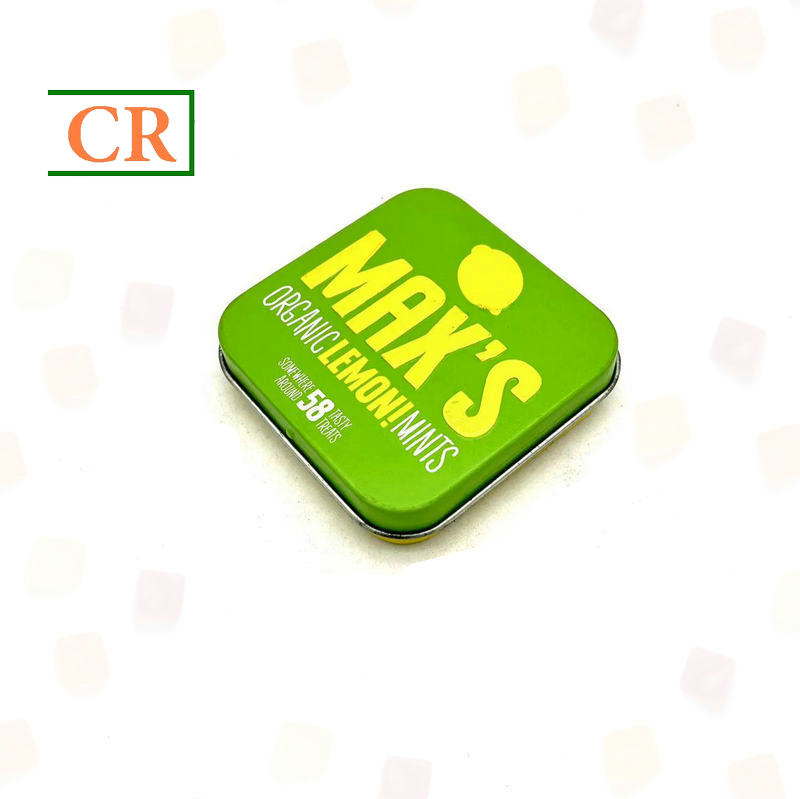
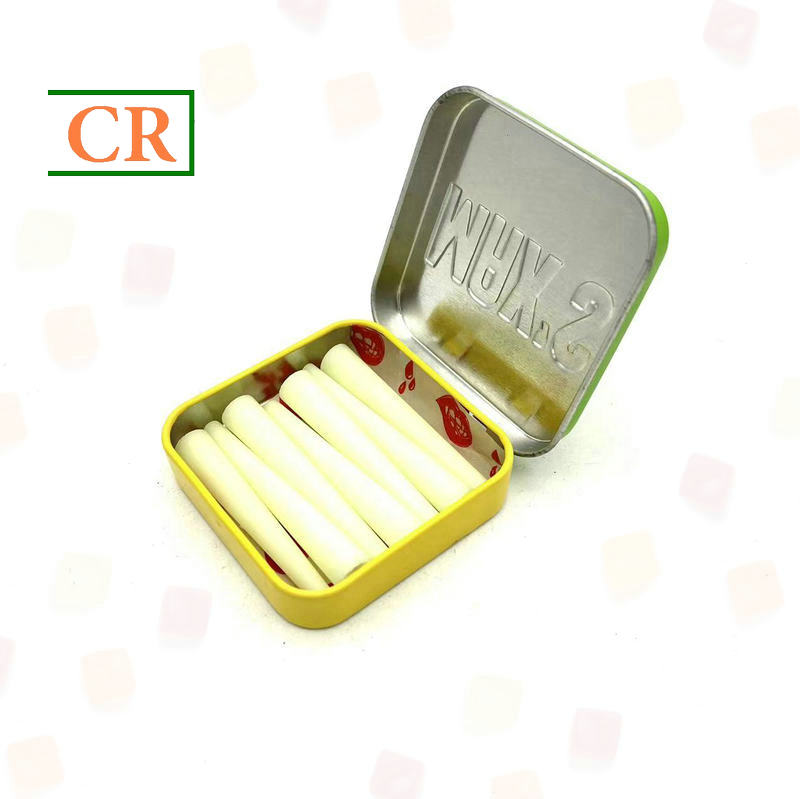
Product fit
Compare the outside shape with the packed interior
The closed tin shows its external form, while the open view helps communicate the internal arrangement. Together they are more useful than an exterior photograph alone when discussing fit and usable space.
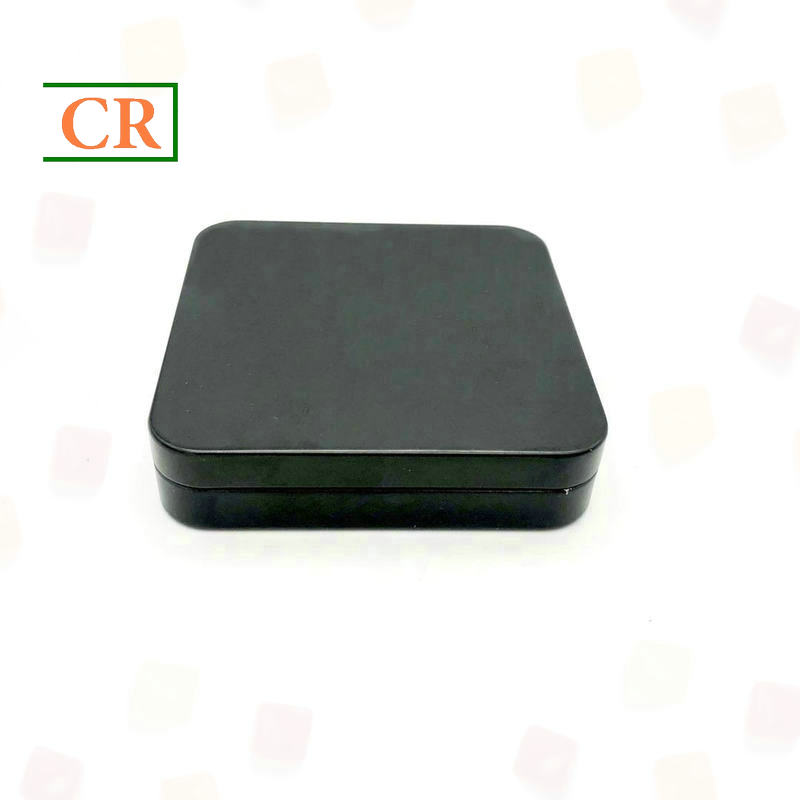

Closure detail
Show the lid open when the opening action matters
An open and closed view makes the lid and body relationship easier to judge. Point to the feature you want to reproduce, rather than assuming the entire reference is the intended specification.
Explain What to Keep, Change, and Ignore
When sending a reference, explain which aspect matters—size, opening action, finish, or presentation. Then say what should stay similar, what should change, and which visible details should be ignored.
Define What the Prototype Needs to Prove
Prototype expectations should be written before sample evaluation begins. A structural prototype may need to confirm product fit, opening behavior, and pack-out. Another sample may focus more heavily on artwork placement or surface appearance.
When fit matters, the actual packed product or a dimensionally accurate equivalent provides a stronger check. The review should consider removal, orientation, movement, lid clearance, and presentation after opening.
A prototype should not be expected to prove a condition outside its intended scope. Keeping structural, visual, and project-specific approval questions separate makes feedback more actionable.
Copy, complete and send
An RFQ Email You Can Adapt
Once the product, structure, and commercial scope are reasonably clear, the next step is a brief that the supplier can act on. Open the sample email below when you are ready to prepare your inquiry. Replace the bracketed text with your project details, and mark unresolved points as pending.
View the sample supplier inquiry email
A sample inquiry you can adapt
Subject: Custom tin packaging quote — [Project name / SKU]
Hello,
We’re preparing tin packaging for [product and intended use], with [number] units per tin. Each product measures [packed length × width × height, or diameter × height] including its wrapping. Our preferred arrangement is [orientation or layout], and the usable internal space must accommodate [insert, liner, card, or other packed components]. Any fixed outside-size or display restriction is [dimension or none].
We’re considering a [shape and structure] tin with [opening and closing requirements]. Child-resistant or other market-specific requirements for [country / region] are [required, not required, or pending confirmation].
Our artwork is currently [final / draft / concept]. We expect [number] design version(s), with printing on [specified surfaces] and [finish and any optional decoration]. The insert is [required / undecided / not needed], intended to [hold, separate, protect, or present the contents].
Estimated volume is [quantity by tin format and artwork version]. Please quote for [packaging only or packaging plus delivery] to [destination]. We hope to review samples around [date] and need the finished packaging for [packing, launch, or arrival date].
I’ve attached [drawings, draft artwork, packed-product photos, or reference samples]. The references are intended to show [size / structure / closure / finish]; the prototype should help us assess [fit / opening / decoration / insert layout]. Please highlight any details that need confirmation before a final quotation.
Thank you,
[Name / Company]
One Last Check Before Sending
Read the inquiry once as someone who has not seen the product. Can they tell which dimensions are packed-product measurements, which are container limits, how the quantity breaks down by design, and what each reference is meant to show? If an important point is still undecided, saying so is better than allowing the supplier to guess.
Where Packaging Quotes Go Off Track
The most troublesome RFQs often contain plenty of detail, but the details don’t describe the same package. A tin might have a fixed outside size but no confirmed internal layout, or finished artwork might have been designed around an unapproved lid structure.
Quantities can introduce the same ambiguity when several artwork versions are bundled into a single figure. References are another common source of confusion: “same as sample” is only useful when the supplier knows which features to keep and which ones to change.
If Your Packaging Project Is Still Taking Shape
You don’t need final artwork or a production-ready drawing to start a useful conversation. Begin with the packed contents, expected pack count, approximate volume, and the requirements that cannot change—such as a display footprint, opening function, or intended market.
A reference photograph or rough sketch can communicate the direction while your artwork and insert design develop. Label those details as provisional so the initial quotation is understood as a starting point, not an approved specification.
What to Review After the Quote Arrives
Once a quotation is available, compare it with the submitted RFQ rather than reviewing price alone. Size, structure, artwork count, quantity, printing scope, insert requirement, and destination basis should all refer to the same project configuration.
Next, identify assumptions attached to fields that were still pending. A quotation can be internally correct while still referring to a temporary specification.
Simple version control helps. Artwork, drawings, pack-out notes, reference samples, and quotation revisions should remain connected to the same project name or revision.
Before prototype work starts, restate what the sample needs to prove. This keeps the next review focused on fit, structure, decoration, or another defined objective.
Related Reading
Printing & Finish
Joints Tins: Child-Resistant Structures and Printing Options →
Review child-resistant structures and printing options after the RFQ defines the closure and decoration requirements.
Project Timing
How to Prepare Printing Tin Box in Time →
Background reading on production scheduling; confirm current lead times and holiday dates with the supplier.
Structure Review
Compare Tin Structures →
Review available product formats after size, pack count, and opening requirements are clear.
FAQ
Can a quote be prepared without final artwork?
An initial quotation can often be scoped before final artwork when the printing requirement is clear enough. Draft artwork, a PDF mockup, brand guidelines, or a written decoration brief can provide useful context. The artwork status should remain clearly identified until final files are approved.
Which dimensions are required?
Start with the maximum dimensions of the product in its real packed condition. Then add the required pack count and preferred arrangement. If a shelf, display, carton, or other external limit applies, state that separately from the usable internal space requirement.
Should destination and quantity be included?
Yes. Quantity establishes the commercial scale of each configuration. Meanwhile, destination clarifies whether the request covers packaging only or also includes logistics evaluation. Several artwork versions should be listed separately when their quantities differ.
When is a reference sample useful?
A reference sample is useful when size relationships, opening action, structure, finish, or presentation are difficult to explain in writing. The accompanying note should identify which features matter, which features need modification, and which visible features are unrelated to the new project.
Request a Quote
Start With a Clear RFQ
Have a product in mind but haven’t settled every detail? Share the packed-product measurements, your preferred tin style, and whatever artwork or reference images are available. Unconfirmed decisions can be discussed as part of the inquiry.
With those inputs organized, a custom tin packaging quotation can focus on the actual project scope while unresolved decisions remain clearly identified.
| Contact CR Tin About Your RFQ → | Compare Tin Structures |
Post time: Oct-11-2026