
Moisture control in a tobacco tin is rarely a matter of making the lid tighter. It depends on the contents at filling, how the lid meets the body, the gasket or liner, and the conditions the pack faces during storage and transport. A gasket can slow moisture exchange at the closure, but it cannot remove excess moisture already packed inside. The useful starting point is the complete, filled tobacco tin rather than an empty metal shell.
The practical answer
The best sealing system is not automatically the thickest gasket or the tightest lid. A useful design keeps the intended product condition stable while remaining consistent after filling, closing, storage, handling, and reclosure.
Find the real exchange path
Where Moisture Enters or Leaves the Pack
Metal panels can provide a strong physical barrier, yet the practical moisture path often sits somewhere else. In a hinged package, the lid perimeter, corners, hinge area, rolled edges, and closing interface deserve more attention than the broad flat surfaces.
Meanwhile, the contents carry moisture into the pack at filling. Product held in a humid staging room can begin from a different condition than the same product held in a dry room. Once the pack closes, the sealing system mainly controls how quickly that starting condition can change.
Headspace matters as well. This is the volume of air left around the packed contents. A thicker insert or different pack count can change that volume, even when the outside metal dimensions remain unchanged.
As a result, an empty closure sample can look excellent but behave differently after the final contents are loaded. Pack-out height, insert pressure, loose particles, and material movement can all affect the closing line.

Different parts solve different problems
Different Roles of Gaskets and Liners
A gasket normally works at the closure interface. When the lid closes, controlled compression helps the material conform to small variations between contacting surfaces. Its usefulness depends on position, compression, material behavior, and the surrounding metal geometry.
A packaging liner usually has another primary job. It may separate the contents from metal, reduce movement, organize individual pieces, provide cushioning, or support presentation. Some liner materials can also influence moisture movement, although that effect should not be assumed without confirming the actual material.
What a useful gasket review looks like
A sealing pad can appear large enough and still miss part of the real leakage path. For example, one corner may compress heavily while the opposite corner barely touches. The opening edge can feel tight while the hinge edge remains less consistent.
Accordingly, the useful question is not simply whether a gasket exists. The better question is whether stable contact occurs along the intended sealing path after the actual contents and insert are loaded.
- Check whether the gasket lies flat before closing.
- Inspect corners for folding, stretching, or displacement.
- Compare hinge-side compression with opening-side compression.
- Confirm that the lid still reaches its intended closed position.
- Repeat the observation across several samples rather than one ideal unit.
What a liner should be asked to do
A liner works best when its primary purpose is clear. A paper wrap may prevent direct surface contact. A formed insert may separate individual pieces. A foam component may reduce movement. Those are different functions and should not be mixed into one vague requirement such as “better moisture control.”
In addition, liner thickness can affect the complete assembly. Once contents are added, a thick insert may push against the lid. In another design, the contents may settle into the liner and create more headspace than expected.
For this reason, gasket and liner selection belongs after structural review, not before it. The same component can behave differently when the lid depth, edge geometry, hinge position, or internal load changes.
Gasket decision
Follow the sealing interface
Look for continuous contact, stable positioning, reasonable compression, and repeatable closing behavior.
Liner decision
Protect without disturbing closure
Check loaded height, movement, surface contact, headspace, and any effect on final lid engagement.

Avoid both extremes
Under-Sealing and Over-Sealing Risks
Under-sealing leaves easier paths for environmental exchange. A visible gap is an obvious warning, although smaller inconsistencies can exist without looking dramatic. Variability from pack to pack can be just as important as one clearly poor closure.
For example, a lid may close smoothly on an empty sample but sit slightly higher after product loading. A liner may wrinkle near one corner. Loose material may enter the sealing interface. These small changes can alter the result without changing the outer metal dimensions.
Signs worth investigating before production
- One edge closes sooner than the opposite edge.
- A corner shows visibly lower gasket contact.
- The lid springs upward after pressure is released.
- A liner shifts into the closing area.
- Closing feel varies noticeably between nominally identical samples.
- Repeated opening changes gasket position or lid alignment.
Maximum compression is not the target.
The useful target is controlled, repeatable contact that does not distort the lid, create spring-back, or trap an unsuitable starting condition.
Why over-sealing can be a real problem
A stronger seal cannot remove excess moisture already inside. Instead, it can slow the movement of that moisture out of the pack. Temperature changes can then redistribute moisture through the product, liner, and headspace.
Mechanical effects matter too. A sealing component that is too thick for the available space can change lid engagement. Excess compression may increase closing force, alter opening feel, or prevent the metal parts from reaching their intended position.
Accordingly, “airtight,” “moisture-resistant,” “leak-resistant,” and “sealed” should not be treated as identical engineering claims. When a numerical performance target matters, the test method and acceptance rule should be agreed before the number is used.
The route is part of the packaging system
Warehouse and Ocean-Shipping Conditions
A pack can leave the filling room in stable condition and meet a very different environment several hours later. Warehouse staging, loading docks, road transport, port dwell, ocean freight, unloading, and destination storage can each introduce temperature and humidity changes.
A realistic scene is easy to picture. Filled cases leave an air-conditioned area, wait near an open loading door, then enter warm humid air. Later, the same shipment may cool overnight or arrive in a cooler destination warehouse.
Temperature matters because relative humidity changes with temperature. In addition, condensation becomes possible when moist air reaches its dew point. The NOAA National Weather Service explanation of dew point provides useful background for understanding why a single relative-humidity number cannot describe every condensation risk.
Consequently, storage humidity should not be converted into one invented universal target for every product. If an approved product specification already defines a range, that requirement can guide sampling. Otherwise, relative comparison is safer than presenting an arbitrary humidity value as a product standard.
Secondary packaging should not be ignored
Corrugated cases, inner bags, pallet wrap, and case liners influence the local environment around individual packs. They can slow environmental changes, trap moisture, or change the way temperature reaches the primary package.
Likewise, desiccants should not be added simply because ocean shipping is involved. Their suitability and quantity depend on the shipping system, barrier materials, route, volume, duration, and expected environmental exposure.
The practical goal is a route-based review. Factory storage, loading, transit, port dwell, ocean freight, unloading, and destination storage should be mapped before a packaging change is approved.
Where this review adds the most value
When This Packaging Review Is Especially Useful
Not every tobacco tin needs the same level of sealing review. For products moving through a short, controlled distribution route, a consistent closure may be enough for the agreed packaging requirements. When moisture gain or loss could affect product condition, extended warehouse storage, ocean freight, and repeated opening make the seal and starting moisture condition more important.
The review is also useful when a gasket, foam pad, paper liner, or formed insert is changed, or when several pack counts must fit the same metal case. Small differences in loaded height can change lid engagement even when the outer dimensions stay the same. If otherwise identical samples close differently, compare the full assemblies before approving the design.
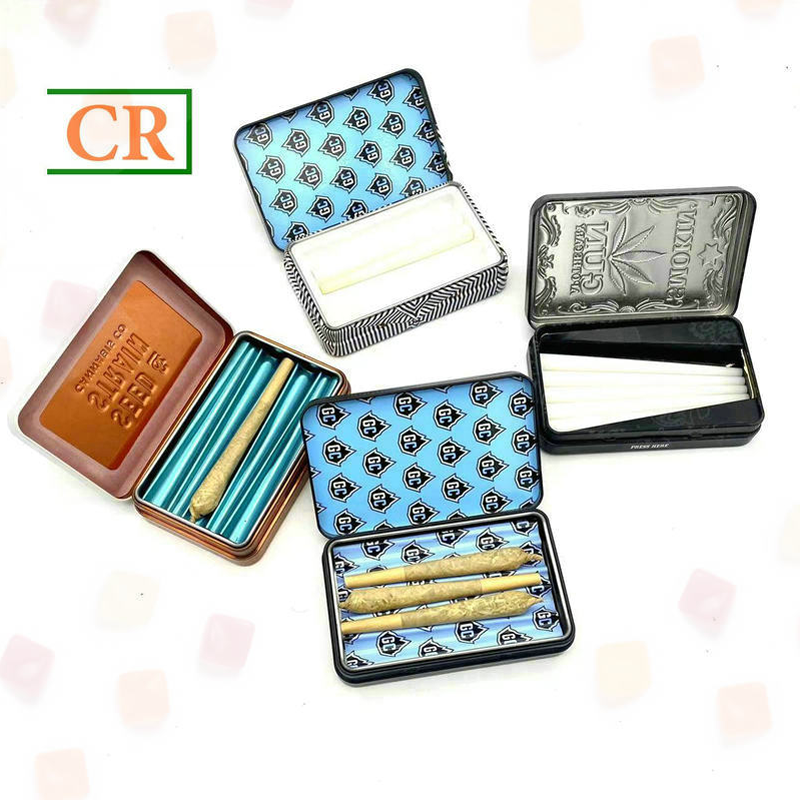
When the sealing requirement becomes central to the project, reviewing several existing rectangular structures can also help narrow the discussion before custom sampling. The rectangular metal packaging range provides a useful structure comparison without assuming that every format needs the same gasket or liner.
Make the sample answer a decision
How to Compare Gasket and Liner Samples
A sample test becomes useful only when the result changes a packaging decision. For example, the project may need to compare a base closure with a gasket version. Another project may need to determine whether a liner interferes with lid engagement after the final pack count is loaded.
Before preparing samples, define that question in one sentence. Then keep unrelated variables as stable as practical. Different fill quantities, content lots, storage rooms, or headspace volumes can otherwise hide the effect of the packaging change.
Set Test Conditions Around the Actual Distribution Risk
Temperature, humidity, duration, sample quantity, and acceptance limits should come from the actual project or an agreed test method. Arbitrary values can make a trial appear technical while providing little connection to the distribution risk.
When formal package conditioning is appropriate, ASTM D4332 is one recognized reference for conditioning containers, packages, and packaging components under specified atmospheres. Its own scope also distinguishes laboratory conditioning from exact duplication of every field environment.
For an early development comparison, start with the same product and filling conditions, change only the intended packaging variable, and document closure fit and reclosure behavior. Visual inspection can reveal poor gasket contact, but it cannot demonstrate moisture retention. If moisture control is an acceptance requirement, compare filled packs under agreed exposure conditions and measure a product-relevant moisture indicator using an approved method and acceptance limit.
Record the starting condition before the lid closes
A simple sample sheet can prevent later confusion. Record the sample ID, structure, gasket or liner option, content lot, fill quantity, assembly date, storage location, and known environmental conditions.
Photographs also help when they are taken consistently. Use the same angle for lid contact, hinge condition, insert position, and loaded height. That creates evidence that can be compared rather than a collection of attractive product pictures.
If temperature and humidity data loggers are available, they can add useful environmental context during storage or trial shipping. However, a logger outside the pack measures the surrounding environment, not automatically the internal headspace.
Repeated-opening samples should also remain separate from unopened samples. Every opening exchanges air with the surroundings and can move the gasket, liner, or contents, so the two conditions answer different questions.
Turn the requirement into a useful brief
Questions to Confirm Before Production
Most late sealing problems begin with information that remained undefined during sampling. The outer pack may be approved while the final product height, liner, filling condition, storage route, or reclosure expectation changes later.
A practical purchasing and engineering brief does not need dozens of pages. It only needs enough information to compare the correct structure and understand what the sample must prove.
Contents
Identify what is packed, the pack count, product dimensions, and whether moisture gain, moisture loss, or both are concerns.
Starting condition
Record the known product and room condition at filling rather than assuming the seal creates the desired condition.
Closure
Define the opening style, intended contact line, reclosure need, and any known hinge or edge concern.
Gasket or liner
State the primary function, installation position, material reference when known, and whether it touches the contents.
Distribution
Include warehouse staging, route, ocean freight, season, destination storage, and secondary packing.
Acceptance
Define which observations or approved measurements determine whether one configuration is preferred.
What the final approval should establish
Approve the loaded pack, not only the empty shell. Real contents reveal stack height, insert compression, available headspace, and whether the lid still reaches its intended position.
Approve the components as one assembly. Changing only the liner or gasket after sample approval can change closure behavior even when the metal dimensions remain unchanged.
Approve against the intended route. A pack that sits on an office shelf does not represent a shipment exposed to warehouse staging, port dwell, ocean freight, and destination storage.
Continue the review
Related Reading and Product Paths
Best Storage for Pre-rolls
Continue with broader storage considerations when the main question extends beyond the closure itself.
Airtight Pre-rolls and Flower Packaging
Review other sealing structures when an airtight-style configuration is already part of the packaging brief.
Compare Metal Packaging Structures
Browse existing shapes and closure formats before narrowing a sample comparison to one structure.
Common moisture-control questions
FAQ
Do all metal tobacco packs need a gasket?
No. A gasket should solve a defined sealing problem. Some structures may meet the required storage behavior without an added gasket, while others may need a dedicated sealing interface. The contents, closure geometry, reclosure requirement, and distribution environment should drive that decision.
What is the difference between a gasket and a liner?
A gasket mainly creates controlled contact at the closure interface. A liner normally separates, positions, cushions, wraps, or otherwise protects the contents. A component can perform more than one function, but its primary purpose should remain clear during sampling.
Can excessive sealing create problems?
Yes. Excessive component thickness or compression can change lid alignment, closing force, and opening behavior. A very low-exchange pack can also preserve excessive starting moisture. Stable performance is more useful than maximum compression.
How should warehouse and shipping conditions be included in sampling?
Known warehouse conditions, route, season, port dwell, secondary packing, ocean transit, and destination storage should shape the comparison. Exact test temperatures, humidity levels, durations, and pass limits should come from an approved requirement or agreed test method rather than an invented universal protocol.
Request a sample
Compare the Seal Around the Real Product and Route
A useful sample request can include the contents, pack count, condition at filling, expected storage environment, ocean-shipping route, liner purpose, gasket requirement, and reclosure expectation. Existing drawings or an approved test method can also be included when available.
With those inputs, several configurations can be compared around the actual moisture-control problem rather than a generic “tight seal” claim. That creates a clearer path from sample selection to production review and helps identify the tobacco tin structure that best matches the intended storage and distribution conditions.
Post time: Oct-26-2026