
For a custom tin box project, choosing between an existing mold and a new mold is not simply a question of saving tooling cost versus gaining more customization. The real question is whether an available metal structure can satisfy the product, packing and commercial requirements without creating compromises somewhere else.
A tin that looks close on a specification sheet can still fail because the usable cavity is smaller than the outside footprint, the opening restricts loading, an insert consumes too much space, or the required pack count produces an awkward arrangement. A new mold can solve those constraints, but it also adds tooling development and another layer of structural validation. The better choice is the route that gives the project a controlled fit with the least unnecessary complexity.
The practical answer
Use an existing mold when it already meets the non-negotiable product, opening, pack-count and presentation requirements. Consider a new mold when the metal structure itself—not the insert, artwork or packing arrangement—is what prevents the project from working cleanly.
The mold decision starts with what cannot move
A useful tooling review begins by separating fixed requirements from preferences. Some projects have a pack count that cannot change. Others must fit an existing shipping carton, retail fixture or product platform. A child-resistant closure, a particular opening direction or a product surface that cannot carry pressure may also be non-negotiable. Those are the constraints that should control the mold decision.
Other details are often more flexible. The product may be able to rotate. A tray can move the contents toward the center. A different divider pattern can improve presentation. Artwork and finish can create a very different brand impression around the same metal body. Treating those flexible elements as fixed too early can push a project toward unnecessary tooling.
The opposite mistake is more expensive: forcing a genuinely fixed requirement into an existing mold simply because the mold already exists. A package that works only when the product is compressed, the tray is unusually complex or the loading sequence requires special handling is not automatically the lower-cost solution.
Existing mold: start here when the metal format is already close to the final functional requirement and the remaining differences can be solved cleanly around it.
New mold: move here when fixed structural constraints keep creating the same problem no matter how the insert, orientation or packing layout is adjusted.
Where existing tooling has real value
When an existing mold is the smarter custom choice
An existing mold is strongest when the tin structure is already close to what the packed product actually needs. The outside dimensions are only the first filter. The product still has to fit in its finished condition, pass through the opening normally, sit without unwanted pressure and remain easy to remove after the package is opened.
This route is particularly attractive when the project does not need a unique metal footprint. A brand may still customize printing, surface finish, embossing and the presentation of the contents while using an established tin structure. Insert geometry and product arrangement can also create a much more deliberate interior without changing the basic mold.
That flexibility is valuable because it allows the development effort to focus on the packed result rather than on creating a new metal body by default. But the structure must still be judged against the real product—not against a catalog photograph.
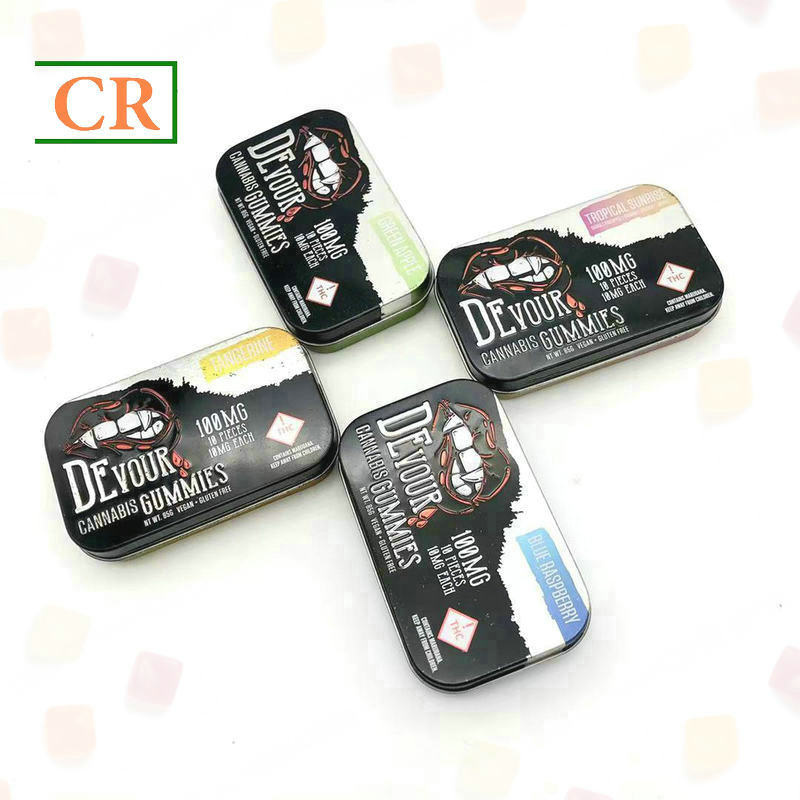
An existing mold is usually a strong candidate when:
- the finished product and required quantity fit without forced compression;
- the product or loaded insert can pass through the opening in the intended loading direction;
- the lid, hinge, rolled edges and closure do not create local interference;
- the insert remains practical rather than becoming a large correction for the wrong body size;
- the final outer proportions still make sense for presentation, shipping and the product platform.
Why “close enough” often fails
A close outside size is not the same as a usable existing mold
A metal package is formed, folded and joined. The finished structure therefore occupies some of the space that appears available when only the outside dimensions are considered. Rolled edges can narrow the opening. A hinge can intrude near one wall. A lid can overlap the body. A button or closure feature can create a local obstruction. The highest outside point is not automatically the highest usable point beneath a closed lid.
For that reason, an existing mold should be reviewed from the product inward. Measure the product in the condition that actually reaches the packing line. Wrappers, labels, sleeves, caps, protective film, folded seams and raised details belong in the finished product envelope. When natural variation exists, a representative maximum is more useful for fit review than one convenient sample or a nominal average.
Orientation can change the answer
The same product can require very different package proportions when it lies flat, stands upright or sits on a narrow side. Orientation changes footprint, lid clearance, insert layout and removal direction. Testing another orientation is therefore one of the first sensible adjustments before a project moves toward new tooling.
That flexibility has limits. An orientation that hides the product, slows packing, creates pressure on a sensitive surface or makes the contents difficult to remove is not a good solution simply because it allows an existing mold to be used.
Opening size and cavity size answer different questions
A rigid product can fit comfortably in the lower body and still be awkward to pass through the opening. A complete insert can face the same problem. The review therefore needs two separate checks: first, can the product or loaded insert enter the tin normally; second, is there enough usable space once it reaches the final position? This is one of the most common reasons a mold that looks correct on paper fails during sampling.
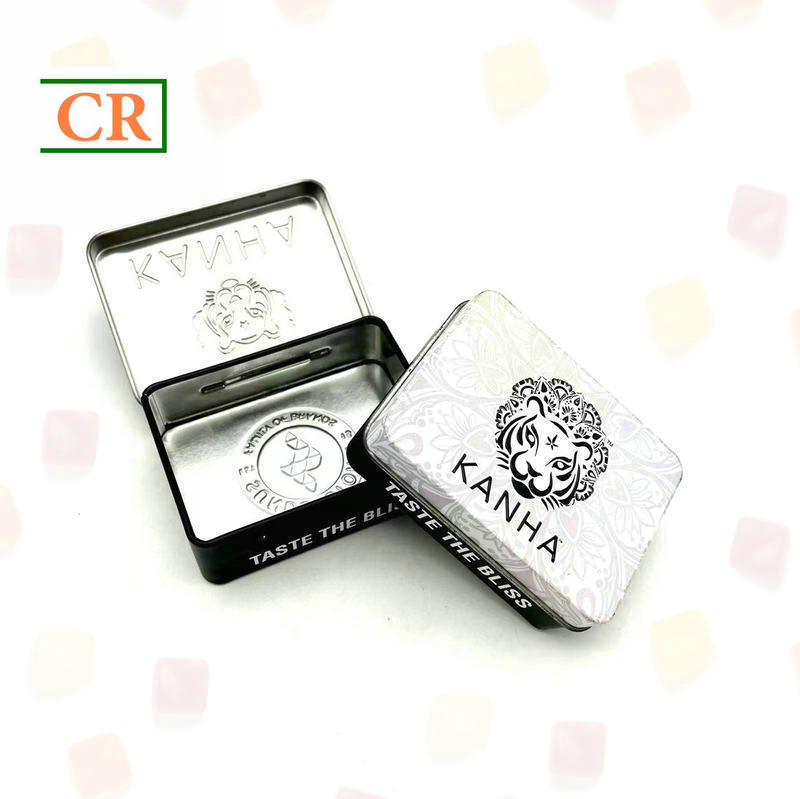
Do not use one generic clearance deduction for every tin. Edge construction, corner shape, insert material, surface finish and loading direction can all change the working space. The relevant drawing and a physical sample are safer references than copying one allowance from another project.
Before new tooling is considered
What can be adjusted around an existing mold?
A dimensional mismatch does not automatically mean that a new mold is required. Some differences can be solved at the packing-system level without changing the metal structure. The important distinction is whether the adjustment improves the package or merely hides a structural problem.
Product arrangement and pack count
For multi-piece packs, assemble the intended quantity physically instead of multiplying one unit dimension. Wrappers can overlap, tapered products can nest, and small dimensional differences can accumulate across a row or multiple layers. A different arrangement may make an existing footprint work, but it should still be repeatable on the packing line and easy for the customer to understand after opening.
Insert design
A tray or divider can center the product, control movement, separate pieces, create finger access and raise the contents for presentation. Those are legitimate uses of an insert when the underlying tin is already appropriate.
The insert is also part of the dimensional system. Its base reduces usable height; its sidewalls reduce length and width; folds and dividers can consume additional cavity space. If the insert has to become unusually thick, deep or complicated simply to compensate for the wrong tin, the apparent saving from existing tooling begins to disappear.
Artwork and finish
Printing, embossing and surface finish can create strong visual differentiation around an existing structure. These are meaningful customization opportunities, but they should not be confused with structural changes. A different body proportion, corner radius, opening profile, hinge location or closure relationship may require tooling changes depending on the specific construction.
When the structure itself is wrong
When a new mold becomes the better decision
New tooling becomes more defensible when the important project requirements are fixed and available tins cannot meet them without creating problems elsewhere. The reason to open a new mold is not simply that a dedicated structure offers more customization. The new structure should remove a real constraint.
Typical signals include:
- the product only fits an existing tin when it is compressed, tilted awkwardly or loaded with unusual force;
- the required quantity cannot be packed cleanly in the available footprint or height;
- the opening, hinge, lid or closure geometry creates unavoidable interference;
- a fixed retail, shipping or equipment dimension cannot be met by the available formats;
- the insert becomes disproportionately complex or wasteful simply to correct the metal body;
- the product has a stable long-term format and a dedicated structure creates clear operational or presentation value.
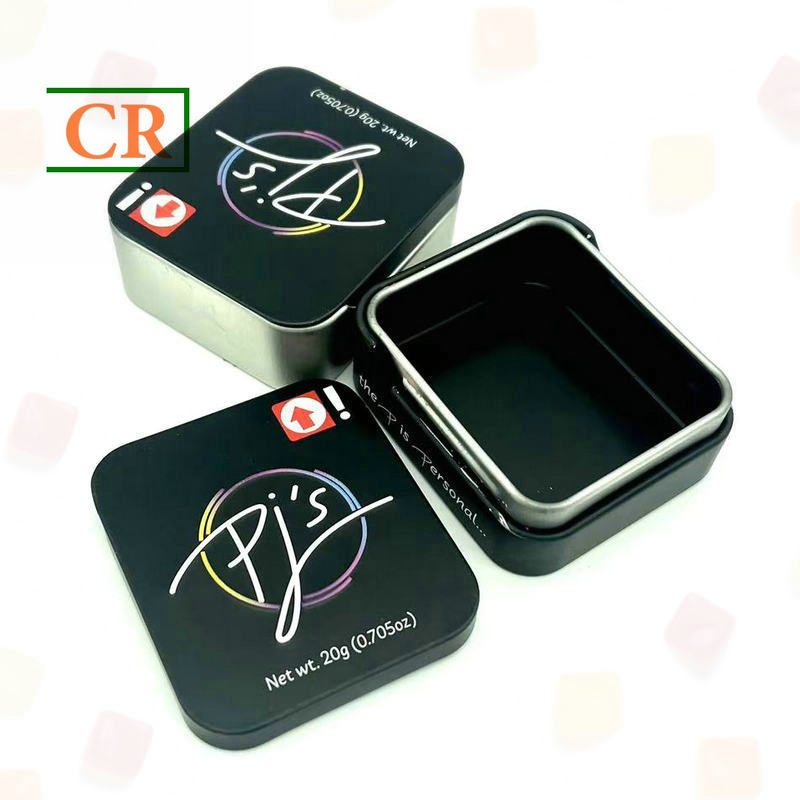
A useful decision rule: if repeated adjustments to orientation, insert layout and packing sequence keep solving one issue while creating another, the project is no longer dealing with a simple fit difference. The metal structure itself deserves review.
Commercial impact
Cost and lead time: compare the whole packaging system
Existing tooling usually has an early advantage because there is already a known metal structure to evaluate. That can reduce structural development and make it easier to compare a representative physical sample sooner. The advantage is strongest when the insert, packing process and shipping configuration also remain simple.
But mold cost is only one part of project cost. An existing tin that requires an oversized insert, creates excess shipping volume, slows packing or needs repeated sample revisions can lose part of its initial advantage. A mold that is “free” to use is not automatically the lowest-cost packaging system.
New tooling adds mold development, dimensional confirmation and structure-specific validation before production approval. That additional work needs a reason. It becomes easier to justify when the product format is stable, the requirements are fixed and the dedicated structure removes a constraint that would otherwise continue through packing, logistics or presentation.
Existing mold has the strongest business case when the core structure already works and the rest of the package stays straightforward.
New mold has the strongest business case when the added tooling removes a fixed structural constraint and creates value over the expected life of the product.
Tooling cost and timing depend on the tin shape, closure, structure and scope of development. Those figures should be quoted against the actual project rather than treated as one universal number.
A realistic comparison
Compare the mold as a complete packing system, not as an empty tin
Consider a project with a wrapped product, a fixed pack count and two existing tin candidates. The first appears closer in outside size, but the loaded insert cannot pass through the opening comfortably. The second provides more internal room, yet the larger footprint requires a bigger insert and leaves the product looking visually loose.
Neither candidate should be approved because one is “closer” and the other is “safer.” The better option depends on which requirements can still move. If product orientation or insert geometry can change without affecting the commercial requirement, an existing mold may still be the right choice. If the pack count, outer dimensions and loading path are all fixed, the same comparison may point toward new tooling.
This is also why volume alone is a poor shortcut. Two products can occupy similar cubic volume and still require very different tins. One may be long and narrow; another may be short, wide and difficult to rotate through the opening. Geometry, not only capacity, controls the decision.
The mold choice should therefore follow a defined packing arrangement. Selecting the metal format first and forcing every later decision to fit around it reverses the development process.
Before asking for a mold recommendation
Give the supplier enough information to judge the two routes properly
A message such as “product size 80 × 40 × 15 mm” looks precise but still leaves the most important mold questions unanswered. It does not show whether those measurements include the final wrapper, which face points upward, how many pieces must fit, whether a tray is required or which dimensions are commercially fixed.
A useful mold-review brief should include:
- Finished product size: maximum length, width and height with the final wrapper, cap, sleeve or attached component.
- Orientation and pack count: how the product sits, total quantity, rows, layers and intended loading direction.
- Insert requirement: tray, divider, liner or no insert, plus any finger-access or pressure-sensitive areas.
- Fixed outer dimensions: restrictions created by retail fixtures, shipping cartons, equipment or brand proportions.
- Reference material: product photos, drawings, prototypes, current packaging or an existing tin sample.
That information allows the supplier to compare an actual existing structure with the project rather than making a recommendation from nominal outside dimensions alone.
The final proof
Validate the mold choice with a physical sample
A drawing can show that the geometry is plausible. It cannot fully reproduce how the product slides through the opening, how the insert flexes, where the lid makes contact, whether the contents rotate during handling or how easy the product is to remove. Physical validation is therefore the final check for both an existing-mold direction and a new-mold direction.
Production-representative products are the strongest reference. If only an early prototype is available, record any known differences in size, stiffness, wrapper or surface condition so the sample does not create false confidence.
- Install the intended insert exactly as it would be used in production.
- Load the correct quantity in the planned orientation and sequence.
- Close the lid normally without unusual force, bending or manipulation.
- Handle the pack and check for movement, rattling or migration.
- Reopen and inspect the product and insert for pressure marks or deformation.
- Remove the contents using the intended finger access or lift feature and, where relevant, check how the partial pack behaves after one unit is removed.
Sample approval rule: a mold is not validated simply because everything can be pushed inside. The selected direction should support repeatable loading, clean closure, controlled movement, practical removal and an acceptable final presentation. If those conditions require repeated compromise, new tooling deserves a serious review.
Post time: Sep-08-2026