
For cigarette tins, retail and e-commerce can sometimes share one primary metal structure, but the complete packaging system rarely stays identical. Retail places more pressure on shelf display, front-facing presentation, barcode access, replenishment, and case organization. By contrast, parcel delivery introduces changing orientation, movement, surface contact, compression, and a longer opening sequence.
In practice, the channel decision should start with the complete pack-out rather than the tin alone. One primary format may work across both routes while the display tray, individual carton, divider, label area, or outer parcel changes. That approach keeps packaging decisions tied to real handling conditions instead of appearance alone.
The Practical Answer
Retail packaging should be developed from the shelf backward. E-commerce packaging should be developed from the parcel inward. A shared primary tin makes sense only when each route passes its own presentation and handling checks.
A retail unit may spend most of its visible life standing in a display tray. Meanwhile, an e-commerce unit may travel on its side inside a parcel and later sit beneath another package. The primary metal structure has not changed, yet the pressure points and presentation risks have.
For that reason, the packaging brief should separate three layers. The primary package is the metal container. Secondary packaging includes sleeves, inserts, individual cartons, wraps, and display trays. Outer cases, parcel shippers, dividers, and transport configurations form the tertiary layer.
This distinction makes channel discussions easier. Instead of asking whether one tin is “strong enough,” the project can identify which packaging layer needs to solve shelf visibility, scanning, movement, compression, or post-delivery presentation.
Design From the Shelf Backward
Retail Display Priorities
In retail, presentation begins before the package opens. A unit may leave a master case, move into a shelf-ready tray, and then sit beside several identical packs. Front-face orientation and repeatable placement therefore matter almost as much as the artwork itself.
A useful review recreates that sequence. Several finished samples can be placed together at normal shelf height. Then the row can be replenished from the intended outer case. This exercise often exposes orientation, tray height, surface contact, and facing-count issues that remain invisible on a design screen.
Give the Main Panel One Clear Job
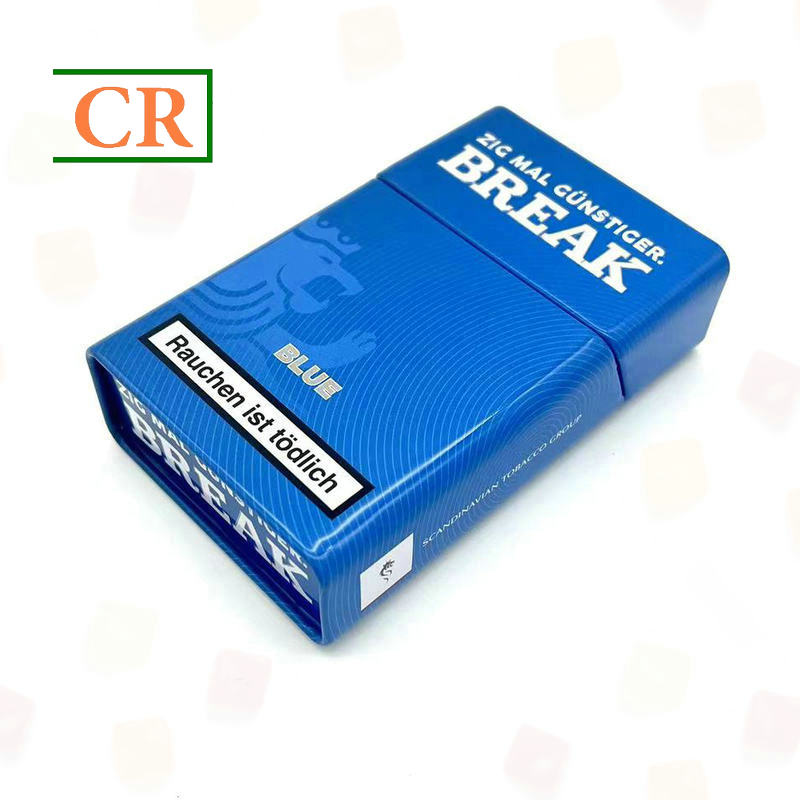
On a shelf, printed metal competes with surrounding colors, price cards, reflections, and nearby packages. As a result, essential visual information should remain easy to locate. Adding more graphics does not automatically create stronger recognition.
At the same time, metal surfaces behave differently under store lighting. Reflective areas can change with viewing angle, while some dark printed areas can make surface marks easier to notice. A representative printed sample therefore gives a more realistic review than a flat digital proof.
Another useful check is to stand several units beside competing shapes rather than viewing the sample against a blank wall. The front graphic may appear balanced by itself yet become visually crowded once price labels and neighboring packaging enter the same field of view.
Check Shelf Footprint and Case Packing Together
A broad front face can create more visual area. However, it may also reduce the number of units placed across a fixed shelf. A narrower pack can improve display density while leaving less room for graphics and information.
Case packing creates a similar tradeoff. A format that appears compact by itself may create unused space once several units, dividers, and display components enter the master case. Accordingly, pack-out efficiency should be checked before artwork becomes final.
Retail handling should also consider surface-to-surface contact. Metal packs packed tightly together may remain structurally sound while showing rubbing on decorated faces. Separators or a more controlled case arrangement can sometimes address this issue without changing the primary structure.
Additional structural references can be reviewed on the metal packaging product page. The structure, front-facing direction, and usable information areas should be clear before detailed graphics are locked.
Design From the Parcel Inward
E-Commerce Handling and Protection Priorities
E-commerce creates a less predictable journey. A unit can move through picking, packing, conveyor handling, sorting, vehicle loading, and final delivery. During that sequence, the parcel may change orientation several times.
E-commerce cigarette packaging should therefore be evaluated as a complete system. The tin, secondary carton, insert, wrap, void fill, parcel shipper, and neighboring products can all influence the delivered condition.
A rigid metal package can still suffer cosmetic damage when it moves freely. For instance, repeated sliding can create rub marks before a major impact ever occurs. Loose movement can also allow the pack to build speed before contacting an outer wall.
Control Movement Before Adding More Material
Movement control is therefore a practical starting point. A correctly fitted carton or insert can limit repeated contact without filling the parcel with loose cushioning.
However, an excessively tight fit creates another problem. Concentrated pressure can develop around raised areas, lid edges, or corners. Repetitive packing may also become difficult when every unit requires force to seat correctly.
A quick packing trial can reveal these issues early. Several units should be packed in succession rather than fitting one carefully prepared sample. If orientation becomes inconsistent or inserts need repeated adjustment, the design may be too sensitive for normal fulfillment work.
For mixed-order fulfillment, neighboring products deserve attention as well. A metal pack may travel beside items with different weights and shapes. Where direct contact is likely, separation can become more important than simply increasing the thickness of the outer box.
Consider Every Likely Orientation
Parcel systems do not preserve one upright position. As a result, broad faces, corners, hinge areas, and closure edges can receive different loads. Protection designed only around vertical stacking may leave another surface unsupported.
During review, rotate the finished pack-out to expose unsupported areas. That makes unsupported zones easier to spot. Inserts should also remain seated after movement because a loose protective part can become another source of contact.
The outer parcel matters as well. A compact individual carton can still move excessively inside an oversized shipper. Therefore, the secondary pack and final parcel should be reviewed together whenever the fulfillment configuration is already known.
The objective is not maximum cushioning. Rather, the objective is controlled movement, suitable load distribution, and repeatable packing without unnecessary material.
Keep Operational Information Usable
Barcode, Label and Information Areas
Both channels rely on machine-readable and operational information, although the handling sequence differs. Retail may require unit scanning during receiving and checkout. Meanwhile, fulfillment operations can add warehouse labels, routing marks, case information, and parcel labels.
Permanent printed content and variable information should not compete for the same area. Reserving a barcode zone and a separate label area early can prevent late stickers from covering important graphics.

Plan the Reading Surface Before Decoration
A barcode may fit visually and still create awkward handling. Codes close to a hinge, tight radius, deep seam, or strongly raised detail can require less convenient scanning angles.
Therefore, a practical flat area should be identified on the structural drawing first. Graphics can then develop around that operational zone instead of forcing the code into whatever space remains.
A physical scan check is also useful because screen artwork cannot recreate normal grip and rotation. The pack can be handled in the same direction expected during receiving or checkout. If several unnecessary movements are required, another location may be easier to operate.
Give Variable Labels a Planned Landing Area
Variable information can change between production runs, warehouses, or distribution routes. Consequently, a predefined label area creates more consistent placement and prevents operational stickers from covering the main design.
Common grip areas also deserve attention. A label placed where the pack is repeatedly held can experience more edge contact. Likewise, a label that bridges a hinge or raised edge may not lie consistently against the surface.
The same logic applies to secondary cartons. Parcel or warehouse labels work better when one broad panel remains available instead of competing with closing seams, tape, folds, or opening flaps.
Legal and regulatory content requires separate verification for the destination and product category. This guide addresses packaging space and handling only; it does not define legal labeling requirements.
Change the Outer Layer When the Route Changes
Secondary Packaging and Compression Protection
Secondary packaging often changes more between channels than the primary metal pack. Retail may favor a display tray, divider, grouping carton, or shelf-ready case. By contrast, parcel delivery may require an individual carton, fitted support, wrap, or another movement-control structure.
This distinction can simplify a mixed-channel program. The primary format can remain common when it performs well in both routes, while each outer configuration addresses a different handling problem.
A useful purchasing question: what problem does each extra component solve?
If a sleeve, carton, divider, wrap, or insert cannot be linked to display, movement control, label space, surface protection, or compression management, its role deserves another review.
When an Individual Carton Is Worth Considering
An individual carton can perform several jobs. It can separate printed metal surfaces, add information space, reduce movement, and spread external pressure. However, it also adds package volume and another assembly step.
Retail does not automatically require that extra layer. A display tray or case divider may protect grouped units more efficiently. By contrast, an individual e-commerce carton may become useful when parcel movement exposes decorated surfaces to repeated contact.
The decision is easier when each failure mode is written down before sampling. If the problem is surface rubbing, a separator may be enough. If the problem is free movement, fit may matter more. If the problem is external pressure, the secondary structure may need to distribute load across a wider area.
Compression Protection Needs a Load Path
Compression rarely acts evenly across a package. Corners, broad panels, hinge areas, and closure edges can react differently. Accordingly, protection should support the parts that actually carry pressure.
Too much free space can increase impact movement. Conversely, an excessively tight fit can create constant pressure or make repetitive packing difficult. Representative dimensional variation should therefore be included during sample review.
Master-case packing deserves the same attention. Efficient case density is useful, yet tightly packed decorated surfaces can create rubbing if no separation exists. A divider, wrap, tray, or another controlled interface may provide a cleaner result.
A practical system also needs repeatability. Inserts should seat predictably, cartons should close without excessive force, and packing should not require small adjustments to every unit.
Presentation Happens at Different Moments
Opening and Unboxing Experience
Retail presentation happens largely before opening. E-commerce presentation begins with the shipping parcel and continues through every inner layer. Consequently, the same primary pack can create two different presentation sequences.
The goal does not need to be elaborate packaging theatre. Instead, each layer should arrive organized, protect the printed surface, and open without unnecessary effort.
Retail OpeningThe front face should lead naturally to the opening direction. Meanwhile, trays or sleeves should release the pack without scraping a decorated surface or requiring awkward rotation. |
E-Commerce UnboxingThe shipper should reveal an orderly secondary package. Protective components should remain in position during transit and then release without creating unnecessary opening steps. |
Inspect the Presentation After Transport
A freshly packed parcel provides only half the answer. After representative handling, a sleeve may shift, an insert may rotate, or the primary pack may arrive upside down. Post-test presentation should therefore be part of the review.
Retail needs a related recovery check. Units should move from the master case into their display position without excessive wiping, rotating, or label adjustment.
These observations can point toward specific packaging changes. Repeated upside-down arrival suggests a restraint issue. Scraping can indicate tight secondary dimensions. A lifted label may reveal an unsuitable application area.
Opening effort matters as well. Extra protective layers should not make the final presentation feel accidental or difficult to understand. Simple, repeatable structures often provide a cleaner balance between transport protection and opening experience.
Approve the Route, Not Only the Sample
Channel-Specific Sample and Logistics Checks
Sampling works best when each sample answers a defined question. A dimensional prototype can confirm basic fit. However, it cannot show final print rubbing, label adhesion, or the condition of the complete shipping configuration.
Accordingly, structural review, artwork review, shelf review, packing trials, and logistics validation can remain separate approval stages. When a problem appears, that separation makes the likely cause easier to identify.
Retail Sample Checklist
Retail checks should reproduce the stocking process rather than inspect one isolated unit. Several packs can be placed inside the planned display system, followed by a realistic case-to-shelf replenishment exercise.
- Check that the front panel stays visible in the display tray and that tray walls do not cover important graphics or information.
- Confirm that the barcode can be scanned without awkwardly rotating the tin.
- Compare the shelf footprint with the planned facing count, then replenish the display from the master case to see whether orientation stays consistent.
- Inspect printed surfaces and lid alignment after representative handling and unit-to-unit contact.
- Review the display under normal store lighting and record the acceptable cosmetic condition before approval.
E-Commerce Sample Checklist
Parcel checks should use the intended shipping configuration. That setup can include the primary pack, secondary carton, insert, wrap, void fill, parcel shipper, and intended packing orientation.
- Check for movement both inside the secondary pack and between that pack and the shipper, including contact with heavier neighboring items.
- After representative handling, inspect broad faces, corners, lid edges, and hinge areas for rubbing or impact marks.
- Assess compression from likely parcel orientations and confirm that inserts remain in place.
- Recheck barcode readability and label condition, then open and close the pack to assess closure behavior.
- Review how the contents are presented on opening, and record cosmetic findings separately from structural damage.
What Should a Logistics Test Answer?
A logistics test may include controlled impact, vibration, compression, and post-test inspection. However, the exact sequence should reflect the planned distribution route and agreed risk level.
The test brief should record the pack configuration, contents, outer carton, orientation, and acceptance points. Photographs before and after testing can make comparisons between sample versions more useful.
For example, repeated rub marks may point toward direct metal contact. A displaced insert may reveal insufficient restraint. Localized carton damage may indicate an unsupported external load path.
A clear inspection sheet can separate lid alignment, surface appearance, corner condition, label adhesion, insert movement, and outer-carton deformation. This makes sample revisions more specific than a general pass-or-fail comment.
For separate production-planning considerations, the existing article How To Prepare Printing Tin Box in Time can be reviewed alongside the channel packaging plan.
One Decision Sheet for Two Routes
Retail vs E-Commerce Comparison Table
The channel difference becomes clearer when every packaging element has a specific function. Retail mainly protects presentation and replenishment efficiency. E-commerce adds stronger requirements around movement control, parcel compression, and post-transport appearance.
The practical compromise is often to keep one primary tin where it performs well in both channels, then adapt the tray, carton, divider, or shipper to each route. A different primary structure is worth considering only when representative checks show that the tin itself cannot meet both sets of requirements.
Before Final Artwork
Build a Channel Decision Sheet
Before artwork is approved, it helps to put the intended sales route and pack-out on one shared brief. That gives procurement, design, packaging, and operations a common reference for the decisions that affect the tin, information panels, shelf display, and delivery protection.
|
Channel Record retail, e-commerce, or mixed distribution and the expected quantity for each route. |
Primary Pack Confirm structure, opening direction, front-facing panel, and intended orientation. |
Information Reserve barcode, variable-label, and other required information areas before final artwork. |
|
Retail Pack-Out Record display tray, shelf-ready case, divider, and replenishment orientation when applicable. |
Parcel Pack-Out Record individual carton, insert, wrap, shipper, movement control, and packing orientation. |
Approval Define channel-specific checks and separate cosmetic acceptance from structural acceptance. |
Record the expected transport method and outer-parcel configuration alongside the retail display plan. With those details agreed, the team can identify whether a problem belongs to the primary tin, the secondary pack, or the way the complete system is handled—without changing components that already work.
Three Actions Before Approval
Turn the Channel Difference Into a Packaging Decision
Retail and e-commerce do not automatically need different primary tins, but they should not be assumed to work with identical outer packaging. Start with the intended shelf display and parcel journey, reserve barcode and label areas before artwork is finalized, and change only the packaging layer that fails a representative check.
Channel Packaging Questions
FAQ
Does the same tin work for retail and e-commerce?
Sometimes, one primary structure can support both channels. However, the decision should follow separate shelf and parcel checks rather than visual preference alone.
A common primary format can pair with a retail display tray and a different parcel-ready secondary carton. If both routes meet their presentation, scanning, handling, and protection targets, one primary structure may remain practical.
When is secondary packaging needed?
Secondary packaging becomes useful when the primary pack cannot solve a specific display, label, movement, surface, or compression problem alone.
Retail may need a tray or grouped separator. By contrast, parcel shipping may require a fitted individual carton or another restraint method. Every additional component should have a defined role.
Where should barcode and label space be planned?
Barcode and label areas should use accessible surfaces with practical scanning and adhesion conditions. Hinges, tight corners, raised details, and heavily formed edges deserve additional review.
The preferred zone should appear on the structural artwork before final graphics fill the available panels. A representative physical sample can then confirm scanning and label placement.
What should be tested for parcel delivery?
Parcel review can examine movement, compression, representative handling impacts, vibration, surface rubbing, label condition, and opening behavior after testing.
The complete intended pack-out should remain in the test setup. Meanwhile, structural and cosmetic observations should be recorded separately so later revisions address the correct failure mode.
Next Step
Request a Quote for the Intended Sales Channel
A useful quotation brief can state whether the project will use retail, e-commerce, or mixed-channel distribution. Planned packaging quantity, required barcode or label area, display format, secondary packaging, and the expected transport method can also be included.
Artwork, pack-out information, and shipping configuration can then support a more focused discussion around shelf presentation, parcel protection, and channel-specific requirements. These details provide a practical basis for reviewing cigarette tins within the complete packaging and logistics system.
| Request a Quote → | View Hinged Tin |
Post time: Oct-22-2026